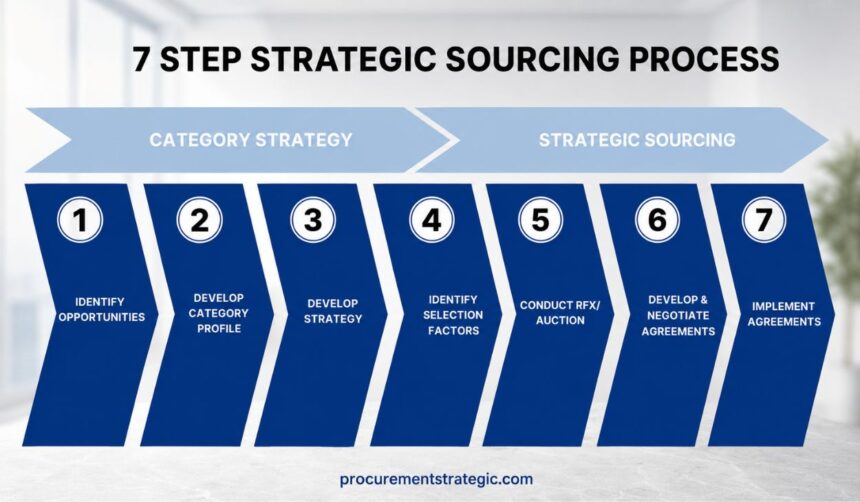
The 7 step sourcing process is a strategic procurement framework that helps organizations purchase products and services more effectively while reducing costs and improving supplier relationships. Rather than selecting vendors based only on price, this approach considers quality, reliability, risk, compliance, and long-term value. Businesses of all sizes use this structured process to make informed purchasing decisions that support organizational goals. As supply chains become more complex, following a proven sourcing methodology helps companies stay competitive, improve operational efficiency, and create stronger partnerships with trusted suppliers.
Why Strategic Sourcing Matters
Strategic sourcing is much more than buying goods at the lowest possible price. It focuses on understanding business requirements, evaluating suppliers carefully, and building relationships that deliver long-term value. A well-planned sourcing strategy reduces supply chain disruptions, improves product quality, and strengthens financial performance. Modern procurement teams also consider sustainability, supplier diversity, and risk management when making sourcing decisions. This balanced approach enables organizations to achieve cost savings while maintaining consistent quality and reliable supply.
Step 1 – Profile Your Spending and Business Needs
The first stage of the 7 step sourcing process begins with analyzing organizational spending and identifying purchasing requirements. Procurement teams gather historical purchasing data, review budgets, and understand future business needs before approaching suppliers. This process helps identify unnecessary expenses, duplicate vendors, and opportunities for cost optimization. By understanding exactly what the organization needs, sourcing professionals can develop a strategy that aligns purchasing decisions with operational goals and financial objectives.
Step 2 – Analyze the Supply Market
Once spending has been analyzed, the next step is researching the supplier marketplace. Companies look at possible hazards that might influence procurement decisions, price structures, market trends, available suppliers, and technical advancements. Understanding the competitive landscape allows organizations to compare supplier capabilities rather than relying on assumptions. Comprehensive market research also identifies emerging suppliers that may offer innovative products, improved services, or better long-term value than existing vendors.
Step 3 – Create a Strategic Sourcing Plan in Step Three
After collecting internal and external information, procurement professionals create a sourcing strategy that outlines objectives, supplier selection criteria, negotiation plans, and implementation timelines. This strategy defines how purchasing decisions will support business growth while minimizing procurement risks. It also establishes measurable performance indicators that allow organizations to evaluate sourcing success over time. A well-developed sourcing strategy provides clear direction for procurement teams and ensures consistency throughout the purchasing process.
Step 4 – Select the Right Suppliers
Supplier selection is one of the most important stages in the sourcing process because choosing the right partner directly impacts quality, cost, and delivery performance. Procurement teams evaluate suppliers based on experience, certifications, financial stability, production capacity, customer service, and compliance with industry standards. Many organizations also conduct supplier audits and request proposals before making final decisions. Selecting suppliers based on total value rather than price alone leads to stronger partnerships and better long-term business outcomes.
Step 5 – Negotiate and Finalize Contracts
Successful negotiations create agreements that benefit both buyers and suppliers while reducing future misunderstandings. Procurement teams negotiate pricing, payment terms, delivery schedules, quality expectations, warranties, and service-level agreements before signing contracts. Effective negotiations focus on building long-term relationships instead of achieving short-term savings. Clearly written contracts establish responsibilities for both parties and provide legal protection if disputes arise during the business relationship.
Step 6 – Implement and Manage Suppliers
After contracts are signed, organizations begin supplier implementation through onboarding, communication, and system integration. Procurement teams ensure suppliers understand delivery schedules, reporting requirements, quality standards, and performance expectations from the beginning. Regular communication helps resolve issues quickly while maintaining productive working relationships. Effective supplier management encourages collaboration, improves operational efficiency, and creates opportunities for continuous innovation throughout the partnership.
Step 7: Track Performance and Make Constant Improvements
The final step focuses on measuring supplier performance and identifying opportunities for continuous improvement. Organizations monitor key performance indicators such as delivery accuracy, product quality, cost savings, responsiveness, and contract compliance. Regular supplier reviews encourage accountability while highlighting areas that require corrective action. Continuous evaluation allows businesses to strengthen supplier relationships, reduce procurement risks, and improve sourcing outcomes over time.
Benefits of the 7 Step Sourcing Process
Following the 7 step sourcing process provides numerous benefits beyond simple cost reduction. Businesses achieve greater purchasing transparency, improved supplier relationships, enhanced product quality, stronger contract compliance, and reduced supply chain risks. Strategic sourcing also improves budgeting accuracy because procurement decisions are based on reliable data rather than assumptions. Organizations that consistently follow structured sourcing practices often experience better operational performance and greater resilience during market changes.
Common Challenges
Despite its advantages, implementing strategic sourcing can present several challenges. Limited market knowledge, incomplete spending data, resistance to organizational change, supplier dependency, and communication gaps can reduce sourcing effectiveness. External factors such as inflation, geopolitical uncertainty, and transportation disruptions also create procurement risks. Companies that invest in procurement training, digital sourcing tools, and strong supplier relationships are better prepared to overcome these challenges successfully.
Best Practices
Organizations can maximize sourcing success by following several proven best practices throughout the procurement lifecycle. Maintaining accurate spending data, conducting regular market research, evaluating suppliers objectively, negotiating collaboratively, and monitoring supplier performance consistently all contribute to better results. Leveraging digital procurement platforms and data analytics further improves decision-making and operational efficiency. Continuous improvement should remain a priority because supplier markets and business requirements evolve over time.
Conclusion
The 7 step sourcing process provides a practical framework for making smarter purchasing decisions while building stronger supplier relationships. Each stage contributes to better cost control, improved quality, reduced risk, and enhanced operational performance. Businesses that follow this structured methodology are better equipped to respond to changing market conditions and supply chain challenges. By combining careful planning, effective negotiations, ongoing supplier management, and continuous performance monitoring, organizations can create a procurement strategy that delivers sustainable long-term value.
FAQs About 7 step sourcing process
- What is the purpose of the 7 step sourcing process?
Its purpose is to help organizations purchase goods and services strategically while reducing costs, improving supplier relationships, and minimizing procurement risks.
- Is strategic sourcing different from procurement?
Yes. Strategic sourcing focuses on supplier selection and long-term planning, while procurement covers the complete purchasing process from ordering to payment.
- Why is supplier evaluation important?
Supplier evaluation ensures businesses choose reliable partners capable of delivering quality products, competitive pricing, and consistent performance.
- How often should supplier performance be reviewed?
Most organizations review supplier performance quarterly or annually, although critical suppliers may require monthly evaluations.
- Can small businesses use the 7 step sourcing process?
Yes. Small businesses can adapt the framework to improve purchasing decisions, reduce expenses, and build reliable supplier partnerships.