Benefits of e procurement refer to the use of digital platforms and online technologies to manage purchasing activities, supplier communication, contract management, and payment processing. Instead of relying on paperwork, emails, and manual approvals, organizations use centralized procurement software to automate the complete purchasing cycle. This digital approach enables businesses to save time, reduce human errors, and gain better visibility into every transaction. Whether a company is small or large, adopting e-procurement creates a more structured and efficient purchasing process that supports long-term business growth while improving operational performance and supplier collaboration.
What are benefits of e procurement?
Benefits of e procurement are an electronic purchasing system that allows organizations to buy goods and services through online platforms. It covers every stage of procurement, including supplier selection, purchase requests, approval workflows, purchase orders, invoicing, and payment processing. By replacing traditional paper-based methods with digital workflows, businesses improve speed, consistency, and accountability. Modern e-procurement solutions also integrate with enterprise resource planning (ERP) systems, accounting software, and inventory management tools, making procurement more accurate, transparent, and easier to manage across multiple departments.
How an E-Procurement System Works
An e-procurement platform follows a structured workflow that begins when an employee creates a purchase request. The request is automatically routed through predefined approval levels before becoming a purchase order that is sent electronically to the supplier. Once the supplier delivers the goods or services, the system records the transaction, matches invoices with purchase orders, and initiates payment. Throughout this process, every action is digitally documented, allowing managers to monitor spending, analyze purchasing trends, and ensure compliance with company procurement policies without relying on manual tracking.
Why Businesses Are Adopting E-Procurement
Businesses across industries are embracing e-procurement because it improves efficiency while reducing procurement costs. Traditional procurement often involves repetitive paperwork, delayed approvals, and limited visibility into purchasing activities. Digital procurement overcomes these issues by building automated procedures that speed up purchase and increase communication between buyers and suppliers. Organizations also gain access to valuable spending insights that help negotiate better supplier contracts, control budgets, and identify opportunities for additional savings while maintaining consistent purchasing standards throughout the organization.
The Shift from Manual to Digital Procurement
The transition from manual procurement to digital procurement has transformed how organizations manage purchasing decisions. Paper documents, spreadsheets, and email approvals have largely been replaced by cloud-based procurement systems that provide real-time access to procurement information from any location. Employees can submit requests, managers can approve purchases remotely, and suppliers receive instant purchase orders electronically. This shift not only reduces administrative workload but also minimizes processing delays, helping businesses respond more quickly to changing operational needs and market conditions.
Current Industry Trends
Modern e-procurement is evolving rapidly with the adoption of artificial intelligence, cloud computing, predictive analytics, and automation. Companies increasingly use AI-powered tools to recommend suppliers, forecast purchasing demand, detect unusual spending patterns, and automate routine procurement tasks. Mobile procurement applications also enable managers to review and approve requests while traveling, improving business agility. Sustainability has become another major trend, with organizations using procurement platforms to evaluate suppliers based on environmental and social responsibility alongside pricing and product quality.
Cost Savings
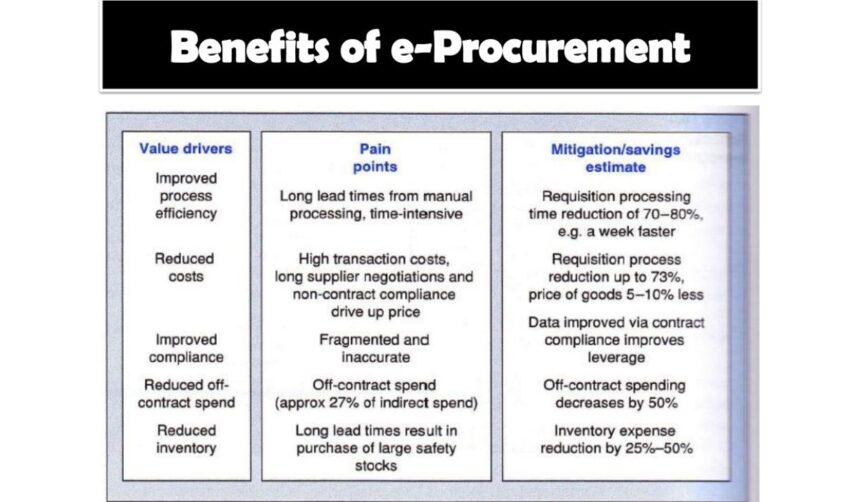
One of the biggest benefits of e procurement is its ability to reduce purchasing costs significantly. Automated procurement minimizes paperwork, decreases administrative expenses, reduces duplicate orders, and prevents unnecessary purchases. Businesses can compare supplier prices more efficiently, negotiate volume discounts, and monitor spending in real time. Better visibility into procurement data also helps organizations identify wasteful spending and optimize supplier relationships. Over time, these improvements contribute to substantial financial savings while allowing procurement teams to focus on strategic initiatives instead of repetitive administrative tasks.
Faster Purchasing Cycles
Speed is another major advantage of e-procurement because automated workflows eliminate delays caused by manual approvals and paperwork. Purchase requests move instantly through predefined approval chains, reducing processing times from days to hours or even minutes. Suppliers receive electronic purchase orders immediately, allowing them to fulfill orders more quickly. Faster procurement cycles improve inventory availability, reduce production interruptions, and enhance customer satisfaction by ensuring that businesses always have the necessary resources available when they are needed.
Improved Transparency
Digital procurement systems provide complete visibility into every purchasing activity, making procurement more transparent and accountable. Every request, approval, purchase order, invoice, and payment is recorded within the system, creating a comprehensive audit trail. Managers can monitor procurement performance through dashboards and reports while identifying bottlenecks or unauthorized spending. This transparency improves trust between departments, simplifies internal audits, and ensures that procurement decisions align with organizational policies and financial objectives.
Better Supplier Management
Strong supplier relationships are essential for successful procurement, and e-procurement platforms simplify supplier management through centralized information and communication. Procurement teams can evaluate supplier performance based on pricing, delivery times, product quality, and contract compliance using accurate performance data. Maintaining detailed supplier profiles allows businesses to identify reliable vendors while reducing dependence on underperforming suppliers. Improved collaboration also enables quicker issue resolution, better negotiations, and long-term partnerships that create value for both buyers and suppliers.
Enhanced Compliance
Maintaining procurement compliance becomes much easier with automated procurement systems because purchasing activities follow predefined rules and approval workflows. Employees cannot bypass company purchasing policies or exceed spending limits without proper authorization. Digital documentation also simplifies regulatory compliance by maintaining accurate procurement records for audits and reporting requirements. Organizations operating in regulated industries particularly benefit from automated compliance monitoring, reducing legal risks while maintaining consistent procurement standards across every department and business unit.
Accurate Reporting and Analytics
Modern procurement software provides detailed reports and advanced analytics that support smarter business decisions. Managers can analyze purchasing trends, supplier performance, spending categories, and budget utilization using real-time dashboards. These insights help organizations forecast future purchasing needs, negotiate stronger supplier contracts, and identify opportunities for additional savings. Accurate reporting also enables executives to evaluate procurement performance using measurable key performance indicators, transforming procurement from a transactional function into a strategic contributor to business growth.
Better Inventory Control
Inventory management becomes more effective when procurement processes are integrated with inventory tracking systems. Businesses can monitor stock levels in real time, automatically generate purchase requests when inventory reaches predefined thresholds, and avoid both stock shortages and excess inventory. Better inventory control reduces storage costs while ensuring continuous product availability for manufacturing or customer fulfillment. Accurate procurement planning also minimizes emergency purchases, which are often more expensive and less efficient than planned procurement activities.
Common Implementation Challenges
Although e-procurement offers many advantages, organizations may face several implementation challenges during adoption. Employees may resist changing familiar procurement processes, while integrating new software with existing business systems can require technical expertise and careful planning. Data migration, supplier onboarding, and staff training also demand time and investment. Successful implementation depends on strong leadership support, clear communication, and comprehensive employee training that helps users understand both the technology and its long-term business benefits.
Best Practices for Successful Adoption
Organizations can maximize procurement success by following proven implementation strategies. Selecting software that matches business requirements, involving stakeholders during planning, providing employee training and maintaining accurate supplier data are all critical steps. Businesses should also establish clear procurement policies, continuously monitor system performance, and collect employee feedback for ongoing improvements. Regular software updates and supplier collaboration further enhance procurement efficiency while ensuring that digital procurement continues delivering measurable value as business needs evolve.
AI and Automation in E-Procurement
Artificial intelligence is reshaping procurement by automating repetitive activities and improving decision-making through predictive analytics. AI can analyze historical purchasing data, forecast future demand, recommend optimal suppliers, detect procurement fraud, and automate invoice processing. Machine learning continuously improves procurement accuracy by identifying purchasing patterns and recommending cost-saving opportunities. As AI technologies become more advanced, procurement professionals will increasingly focus on supplier relationships and strategic planning while automation handles routine administrative tasks.
The Future of Cloud-Based Procurement
Cloud-based procurement solutions are becoming the preferred choice for organizations seeking flexibility, scalability, and lower infrastructure costs. Cloud platforms allow employees to access procurement systems securely from any location while enabling real-time collaboration across departments and suppliers. Automatic software updates ensure businesses always have access to the latest features without complex installations. As digital transformation continues across industries, cloud procurement will play an increasingly important role in helping businesses remain competitive, efficient, and responsive to changing market demands.
Conclusion
The benefits of e procurement extend far beyond replacing paper documents with digital systems. Organizations gain faster purchasing cycles, significant cost savings, improved supplier management, stronger compliance, accurate reporting, enhanced transparency, and better inventory control through automated procurement processes. As technologies such as artificial intelligence and cloud computing continues to evolve, e-procurement will become even more intelligent and efficient. Businesses that invest in digital procurement today position themselves for sustainable growth, stronger financial performance, and greater operational resilience in an increasingly competitive marketplace.
FAQs About benefits of e procurement
- What are the main benefits of e procurement?
E-procurement improves efficiency, reduces costs, increases transparency, strengthens supplier relationships, and automates procurement workflows.
- Is e-procurement suitable for small businesses?
Yes. Many cloud-based procurement solutions are affordable, scalable, and designed specifically for small and medium-sized businesses.
- How does e-procurement reduce costs?
It minimizes paperwork, automates approvals, prevents duplicate purchases, improves supplier negotiations, and provides better spending visibility.
- Can e-procurement integrate with ERP systems?
Yes. Most modern e-procurement platforms integrate seamlessly with ERP, accounting, inventory, and financial management software.
- What is the future of e-procurement?
The future includes greater adoption of artificial intelligence, predictive analytics, automation, cloud technology, and data-driven procurement strategies.