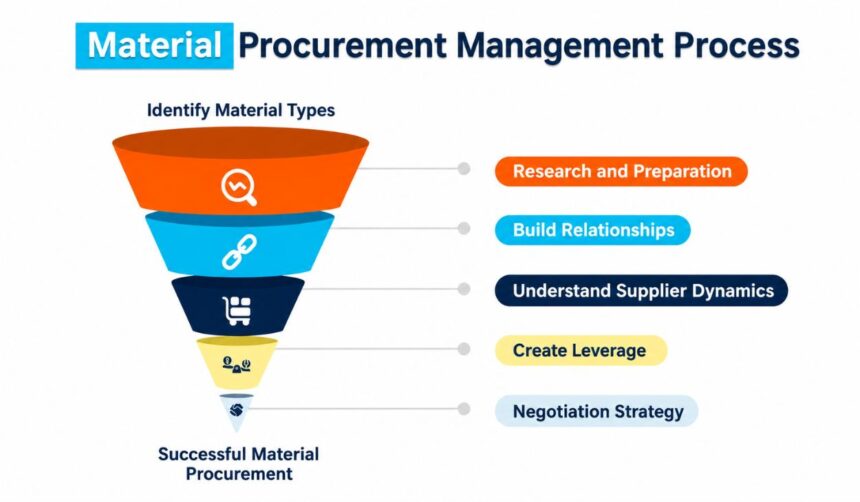
Direct material procurement is one of the most important activities in a manufacturing and production-focused business because it determines whether the right materials reach the production line at the right time, quantity, quality, and cost. Unlike purchases such as office furniture, software subscriptions, or cleaning services, direct materials become part of the product a customer eventually buys. Steel used to manufacture a vehicle, fabric used to make clothing, electronic components installed in a device, and ingredients used in packaged food are all common examples. SAP describes direct materials as raw materials or goods that are directly processed or used in a final product and can be attributed to the product cost. This makes procurement more than a simple purchasing function. It becomes a bridge between suppliers, production teams, inventory planners, finance departments, quality specialists, and customers. When that bridge works smoothly, manufacturers can control costs, maintain production schedules, protect product quality, and respond to market demand with greater confidence. When it breaks, even a small supplier delay can create a much larger operational problem.
What Is Direct Material Procurement?
Direct material procurement refers to the end-to-end process of identifying, sourcing, purchasing, receiving, and managing the raw materials, components, parts, and other physical inputs that directly contribute to a finished product. The process normally begins when a company determines what materials production requires and continues through supplier selection, negotiation, purchase order creation, delivery, goods receipt, quality verification, invoice processing, and supplier performance management. SAP’s current procurement guidance similarly describes a flow that includes requirements determination, source-of-supply determination, purchase order processing, purchase order monitoring, goods receipt, and invoice processing. Think of the process as keeping the heart of a factory beating: production may have sophisticated machinery, skilled workers, and strong customer demand, but without the necessary inputs, everything eventually stops. Effective direct material procurement therefore combines commercial discipline with operational planning. Procurement professionals need to understand not only how much a material costs but also its specification, lead time, availability, quality requirements, supplier capacity, transportation conditions, payment terms, and potential risks.
Why Direct Materials Matter to Business Performance
Direct materials have an unusually close relationship with product cost, quality, production continuity, and customer satisfaction. If the procurement team purchases an expensive material when a reliable lower-cost alternative exists, margins can shrink before the product even reaches the market. If a supplier delivers inconsistent quality, production may experience waste, rework, rejected batches, or customer complaints. If a shipment arrives late, manufacturing schedules can be disrupted, employees and equipment may sit idle, and customer deliveries can be postponed. This is why direct procurement should not be viewed simply as an administrative activity focused on issuing purchase orders. Current procurement guidance from GEP and SAP emphasizes the connection between direct procurement, core operations, product production, and end-customer outcomes. A strong procurement strategy asks a broader question: how can the business obtain the materials it needs while balancing price, quality, availability, resilience, and long-term supplier value? That shift in thinking turns procurement from a transactional department into a strategic contributor to profitability.
Direct vs. Indirect Procurement
The easiest way to understand the difference between direct and indirect procurement is to ask whether the purchased item becomes part of the product sold to the customer. If a furniture manufacturer purchases timber that becomes part of a table, that timber is a direct material. If the same company purchases accounting software, printer paper, or office chairs, those purchases are generally indirect because they support business operations without becoming part of the finished table. SAP explains that direct procurement involves materials and labor contributing directly to final production, while indirect procurement covers goods and services supporting day-to-day operations. The distinction affects procurement strategy because direct purchases are tightly connected to production schedules and product costs. Indirect purchasing can often be standardized around catalogs, policies, and employee needs, whereas direct procurement may require detailed specifications, engineering collaboration, supplier qualification, demand forecasting, quality controls, and long-term agreements. Understanding this difference helps organizations build procurement processes that reflect the actual business impact of each category instead of treating every purchase in exactly the same way.
| Factor | Direct Material Procurement | Indirect Procurement |
| Primary purpose | Supports production of goods or core services | Supports general business operations |
| Examples | Steel, chemicals, fabric, electronic components | Office supplies, software, facilities services |
| Product connection | Becomes part of the finished product or core output | Usually does not become part of the finished product |
| Main concerns | Cost, quality, availability, specifications, lead time | Convenience, policy compliance, service, cost |
| Planning | Closely linked to production and demand forecasts | Often linked to departmental requirements |
| Supplier relationship | Frequently strategic and long-term | Can range from transactional to strategic |
Key Steps in the Direct Material Procurement Process
A well-designed direct material procurement process follows a connected sequence rather than isolated purchasing activities. First, the organization identifies material requirements using production plans, forecasts, inventory levels, bills of materials, and customer demand. The procurement team then determines suitable sources of supply and evaluates suppliers based on capabilities, pricing, quality, capacity, reliability, and commercial conditions. Once a supplier is selected, the company negotiates terms and creates a purchase order or other contractual arrangement defining quantities, specifications, prices, delivery requirements, and conditions. After the supplier ships the materials, the receiving team records the goods and checks them against the purchase order and applicable quality requirements. The final stages involve invoice matching, payment, performance evaluation, and ongoing supplier management. SAP’s current process documentation identifies purchase requisitions, purchase orders, goods receipts, stock management, and invoices as central components of the direct materials workflow. The exact workflow varies by company, but the principle remains the same: every stage should connect demand with supply while maintaining visibility and control.
Demand Planning and Material Requirements
Demand planning provides the foundation for effective direct material procurement because purchasing decisions are only as good as the information behind them. Production teams need to estimate what they will manufacture, when they will manufacture it, and how many units customers are likely to require. Those plans can then be translated into material requirements through bills of materials, inventory records, safety-stock policies, lead times, and supplier constraints. Material Requirements Planning, or MRP, is particularly useful because it can evaluate stock levels and planned requirements to identify shortages and generate procurement proposals. SAP notes that MRP can automatically generate purchase requisitions based on defined requirements and material planning information. This automation can reduce manual work and help procurement team’s act before a shortage becomes a production emergency. Still, technology cannot replace judgment. Forecasts can be wrong, demand can change suddenly, and suppliers can face unexpected constraints. The best organizations therefore combine system-generated recommendations with human review, market knowledge, supplier communication, and practical understanding of production realities.
Supplier Sourcing and Qualification
Once material requirements are clear, the next challenge is finding suppliers capable of delivering the required product consistently. Supplier sourcing should look beyond the lowest quoted price because an inexpensive supplier can become expensive when late deliveries, defects, emergency freight, or poor communication are included in the total cost. Procurement teams may assess manufacturing capability, production capacity, quality certifications, financial stability, geographical exposure, lead times, technology, compliance, and previous performance. For strategic materials, supplier qualification can also involve sample testing, factory assessments, technical reviews, and approval processes involving engineering or quality departments. Direct procurement is especially sensitive to supplier capability because the materials being purchased often become part of the final product. Current industry guidance emphasizes supplier qualification and management as essential parts of direct sourcing. A useful approach is to create a balanced supplier scorecard rather than relying on price alone. The objective is not merely to find someone who can sell the material, but to establish a dependable supply source that can support production today and grow with the business tomorrow.
RFQs, Negotiation, and Contracting
Requests for quotation, competitive bidding, negotiations, and contracts help procurement teams establish commercially sound purchasing arrangements. An RFQ should provide enough technical and commercial detail for suppliers to quote against the same requirements; otherwise apparently cheap offers may not be genuinely comparable. Negotiations can cover unit price, volume discounts, payment terms, minimum order quantities, delivery schedules, freight responsibilities, quality requirements, warranty provisions, price-adjustment mechanisms, and service-level expectations. For commodity-sensitive materials, organizations may also establish formulas linked to recognized market indices rather than relying on fixed prices indefinitely. A good contract protects both parties by creating clear expectations while allowing reasonable flexibility when market conditions change. This matters because direct material markets can experience sudden movements in commodity prices, transportation costs, currency rates, or availability. Procurement teams should therefore evaluate total cost of ownership, not just the purchase price displayed on a supplier quotation. A supplier offering a slightly higher unit price may ultimately create greater value if it provides better quality, shorter lead times, stronger delivery reliability, and fewer disruptions.
Direct Material Procurement and Supplier Relationships
Supplier relationships are especially important when the purchased materials are critical to production. A transactional relationship may be sufficient for standardized, readily available materials, but strategic materials often require deeper collaboration. Procurement, engineering, quality, planning, and suppliers may work together on product specifications, forecasts, capacity planning, quality improvements, packaging, logistics, and cost-reduction opportunities. Open communication can help suppliers prepare for demand changes before purchase orders suddenly increase, while buyers can gain earlier visibility into potential capacity or raw-material constraints. Direct sourcing platforms can also help connect engineering information, bills of materials, supplier responses, and commercial negotiations. SAP notes that its direct-material sourcing process can incorporate materials or bills of materials identified by engineering and invite suppliers to participate in sourcing events. Strong supplier relationships should not mean abandoning competition or commercial discipline. Instead, they create a framework where both sides understand expectations, share useful information, resolve problems quickly, and identify opportunities to improve the overall supply chain.
Cost Control in Direct Material Procurement
Cost control is one of the most visible benefits of strong direct procurement, but effective cost management is more sophisticated than simply negotiating a lower price. Procurement teams need to understand the full cost structure behind a material, including transportation, duties, storage, inspection, quality failures, handling, payment terms, currency exposure, and potential disruption costs. A supplier with a low quoted price may become more expensive if it consistently ships late or produces defective materials. Conversely, a supplier with a slightly higher price may deliver reliable quality and predictable lead times that reduce total operating costs. Category managers can use historical purchase data, supplier comparisons, market intelligence, should-cost models, and volume analysis to identify opportunities. Long-term agreements can also provide better commercial visibility where demand is predictable. The goal is to achieve the right balance between competitive pricing and supply reliability. When procurement teams understand the economics behind a material rather than focusing on the invoice price alone, they can make decisions that protect both immediate budgets and long-term margins.
Quality Management in Direct Procurement
Quality begins before a purchase order is issued. Procurement teams should work closely with engineering and quality departments to ensure that supplier specifications accurately reflect what production requires. Material grades, dimensions, tolerances, chemical composition, performance requirements, packaging standards, testing procedures, and acceptance criteria may all need to be defined before sourcing begins. Supplier qualification can then determine whether a vendor has the processes and capabilities required to meet those specifications consistently. Once materials arrive, receiving and inspection processes provide another layer of protection by identifying defects before materials move deeper into production. A single poor-quality batch can create more than a procurement problem; it can lead to production waste, customer returns, recalls, reputational damage, or safety concerns depending on the product. That is why quality should be treated as part of procurement value rather than as a separate downstream activity. The best direct procurement teams measure supplier quality alongside cost and delivery performance, creating a balanced view of supplier effectiveness.
Inventory and Lead-Time Management
Direct material procurement must carefully balance availability against inventory cost. Keeping too little stock creates the risk of production interruptions, while keeping too much ties up working capital and increases storage, insurance, handling, and obsolescence costs. The challenge becomes even greater when materials have long or unpredictable lead times. Procurement teams need reliable information about supplier production capacity, transportation routes, minimum order quantities, replenishment times, and demand patterns. MRP systems can support this process by considering stock levels, requirements, lead times, safety stock, and order quantities when generating procurement proposals. Businesses can also segment materials according to criticality. A low-cost, easily replaceable component may require a different inventory strategy from a specialized component supplied by only one qualified manufacturer. By connecting inventory policies with procurement and production planning, organizations can avoid the common mistake of treating every material as if it carries the same level of risk.
Risk Management in Direct Material Procurement
Risk management has become an essential part of direct procurement because supply chains can be affected by supplier failures, geopolitical events, transportation disruptions, natural disasters, regulatory changes, commodity price movements, cyber incidents, and sudden demand shifts. The first step understands which materials and suppliers are genuinely critical. Organizations can then assess factors such as supplier concentration, geographical exposure, financial stability, capacity, lead time, substitutability, and recovery options. A dual-source strategy may reduce dependence on a single supplier, although it can increase qualification and management costs. Alternative materials can provide another form of resilience if engineering teams approve suitable substitutes before a crisis occurs. Procurement teams should also maintain contingency plans for critical categories rather than waiting until a disruption happens. Current procurement research shows that risk management remains a major priority for procurement leaders as organizations navigate cost pressures, regulatory demands, and supply-chain disruption. Strong risk management does not mean eliminating every possible risk; it means understanding exposure, preparing realistic responses, and making informed trade-offs.
Technology and Digital Direct Material Procurement
Technology is changing how organizations manage direct materials by connecting procurement data with production planning, inventory, finance, supplier information, and analytics. ERP platforms can automate purchase requisitions, purchase orders, goods receipts, invoice processing, and other repetitive workflows, while sourcing systems can support supplier events, quotations, negotiations, and contract management. SAP’s direct procurement documentation highlights automated processes, reduced manual effort, and real-time monitoring as key benefits of digital workflows. The broader procurement function is also investing heavily in digital technologies and artificial intelligence. Deloitte’s 2025 Global Chief Procurement Officer Survey reported that leading procurement organizations were allocating as much as 24% of their procurement budgets to technology, with those organizations reporting stronger returns from GenAI investments. The opportunity is significant, but digital tools should solve real procurement problems rather than simply add another system. A platform becomes valuable when it gives teams cleaner data, faster decisions, better supplier visibility, stronger controls, and more time to focus on strategic work.
AI, Analytics, and Procurement Visibility
Artificial intelligence and advanced analytics can give procurement teams new ways to understand direct material spend and identify emerging risks. Instead of manually reviewing thousands of purchase-order lines, analytics tools can categorize spending, identify unusual price movements, compare supplier performance, highlight maverick buying, and reveal opportunities for consolidation. AI can potentially assist with supplier research, contract analysis, demand signals, communication, and risk monitoring, although important commercial and technical decisions still require human oversight. Deloitte’s current procurement research describes AI and digital transformation as major areas of investment while also emphasizing the importance of keeping people involved in technology-enabled procurement. This human-and-technology combination is particularly valuable in direct material procurement because data can show what is happening, while experienced professionals often understand why it is happening. For example, an analytics system may identify a sudden supplier price increase, but a procurement manager may recognize that a commodity index, energy cost, or capacity shortage explains the change. The strongest organizations use analytics as a decision-support engine rather than treating automation as a substitute for expertise.
Key Metrics for Direct Material Procurement
Performance measurement gives procurement leaders a way to determine whether their direct material strategy is actually improving business outcomes. Useful metrics can include purchase price variance, supplier on-time delivery, supplier defect rates, lead-time accuracy, contract compliance, inventory turnover, material availability, savings achieved, cost avoidance, and supplier concentration. However, metrics should be connected to business objectives instead of becoming a collection of numbers that teams report without acting on. A procurement department that achieves a large price reduction but causes repeated quality failures has not necessarily created value. Similarly, excellent supplier delivery statistics mean little if the business is carrying excessive inventory because forecasts are inaccurate. A balanced scorecard can combine financial, operational, quality, risk, and supplier relationship measures. Procurement leaders should also establish thresholds that trigger action, such as reviewing a supplier when on-time delivery falls below a defined level or investigating repeated price increases. Good measurement turns procurement from a reactive function into a continuous improvement discipline.
| Metric | What It Measures | Why It Matters |
| Purchase Price Variance | Difference between expected and actual purchase cost | Helps identify cost movement |
| On-Time Delivery | Supplier delivery reliability | Supports production continuity |
| Defect Rate | Quality of incoming materials | Protects production and customer quality |
| Lead-Time Accuracy | Reliability of supplier lead-time commitments | Improves planning |
| Inventory Turnover | How efficiently inventory is used | Helps control working capital |
| Supplier Concentration | Dependence on particular suppliers | Highlights supply risk |
| Contract Compliance | Purchasing against negotiated terms | Protects savings and controls |
Best Practices for Improving Direct Material Procurement
Improving direct material procurement requires a connected strategy rather than a single software purchase or cost-cutting initiative. Companies should begin with accurate material master data, clear specifications, reliable demand information, and a well-maintained supplier database. Procurement should collaborate with production, engineering, finance, quality, and logistics instead of operating as an isolated department. Supplier performance should be reviewed regularly, with corrective actions and improvement plans where necessary. Businesses should also segment materials according to strategic importance, supply risk, spend value, and substitutability so that procurement resources are directed toward the categories where they can make the greatest difference. Digital workflows can reduce repetitive administrative work, while analytics can provide visibility into costs, suppliers, inventory, and demand. At the same time, organizations should maintain practical contingency plans for critical materials. The most effective approach is continuous improvement: measure the current process, identify the biggest bottlenecks, fix them, measure again, and keep refining the system. Procurement becomes stronger when every improvement makes the next decision easier, faster, and better informed.
Common Challenges in Direct Material Procurement
Despite its importance, direct procurement can become complicated when information is fragmented across spreadsheets, emails, ERP systems, supplier portals, and individual employees. Poor demand forecasts can create shortages or excessive inventory, while outdated supplier information can lead teams to rely on vendors that no longer have adequate capacity. Technical specifications may also change without being communicated properly to suppliers, creating quality problems and unnecessary purchasing errors. Another common challenge is focusing too heavily on unit price while overlooking logistics, quality, lead time, and risk. Global supply networks can add further complexity because currency fluctuations, trade restrictions, transportation issues, and regional disruptions can quickly affect material availability and cost. Digital transformation can help, but technology projects themselves can fail when data is poor or employees are not properly trained. Procurement teams therefore need both process discipline and organizational cooperation. A successful system is not merely one where purchase orders move electronically; it is one where everyone involved has the information needed to make timely and responsible decisions.
Future of Direct Material Procurement
The future of direct material procurement is likely to become more connected, predictive, and data-driven. Instead of waiting for shortages to appear, procurement systems will increasingly use forecasts, inventory signals, supplier information, and market data to identify potential problems earlier. AI may help automate routine analysis and communication, while procurement professionals concentrate more heavily on strategy, negotiations, supplier development, risk management, and complex decisions. Sustainability and supply-chain transparency are also becoming more important as organizations face increasing expectations around responsible sourcing and supplier visibility. PwC’s digital procurement survey reports that companies are targeting greater procurement process digitalization and that ESG remains an important procurement priority. Yet the future is not simply about replacing people with machines. Direct procurement involves relationships, judgment, technical understanding, and negotiation, all of which remain deeply human activities. The winning model will likely be a blended one where reliable data and intelligent automation handle repetitive work while experienced professionals provide context, challenge assumptions, and make strategic choices.
Conclusion
Direct material procurement sits at the center of the relationship between supply chains and finished products. It determines whether manufacturers can obtain the right materials at competitive costs while maintaining the quality, availability, and reliability required by production. From demand planning and supplier qualification to negotiation, inventory management, quality control, risk management, and invoice processing, every stage contributes to the final result. Modern procurement systems can make these activities more connected and visible, while analytics and AI can help teams identify patterns and act faster. Current procurement guidance supports the value of integrating requirements planning, sourcing, purchasing, goods receipt, inventory, and invoice processes into a coordinated workflow. The real opportunity is to stop treating procurement as simply the act of buying materials and start treating it as a strategic capability that protects margins, supports production, strengthens supplier relationships, and builds resilience. When businesses manage direct materials with that broader perspective, procurement can become one of the strongest engines of operational performance and sustainable growth.
FAQs About Direct Material Procurement
What is direct material procurement?
Direct material procurement is the process of sourcing and purchasing raw materials, components, and other inputs that directly become part of a finished product or support the company’s core production activity. It typically includes requirements planning, supplier sourcing, negotiation, purchasing, delivery, receiving, quality checks, and invoice processing.
What are examples of direct materials?
Common examples include steel, plastics, chemicals, fabric, timber, electronic components, food ingredients, mechanical parts, and packaging materials when those items become part of the final product. The exact classification depends on what the company manufactures and how its accounting and procurement systems define direct materials.
How does direct procurement differ from indirect procurement?
Direct procurement purchases materials or inputs that contribute directly to the final product, while indirect procurement covers goods and services that support business operations without normally becoming part of the product. For example, steel used in a car is direct, while office furniture used by the company’s employees is generally indirect.
How can companies reduce direct material procurement costs?
Companies can reduce costs through strategic sourcing, supplier competition, long-term agreements, demand consolidation, specification optimization, supplier development, better inventory planning, and total-cost analysis. The best strategy considers quality, logistics, reliability, and risk instead of focusing only on the supplier’s quoted unit price.
Why is technology important in direct material procurement?
Technology can connect procurement with production planning, inventory, suppliers, finance, and quality processes. ERP, sourcing, analytics, and AI-enabled tools can automate repetitive tasks, improve visibility, identify risks, and support faster decisions. Human expertise remains essential for negotiations, supplier relationships, technical judgments, and strategic decisions.